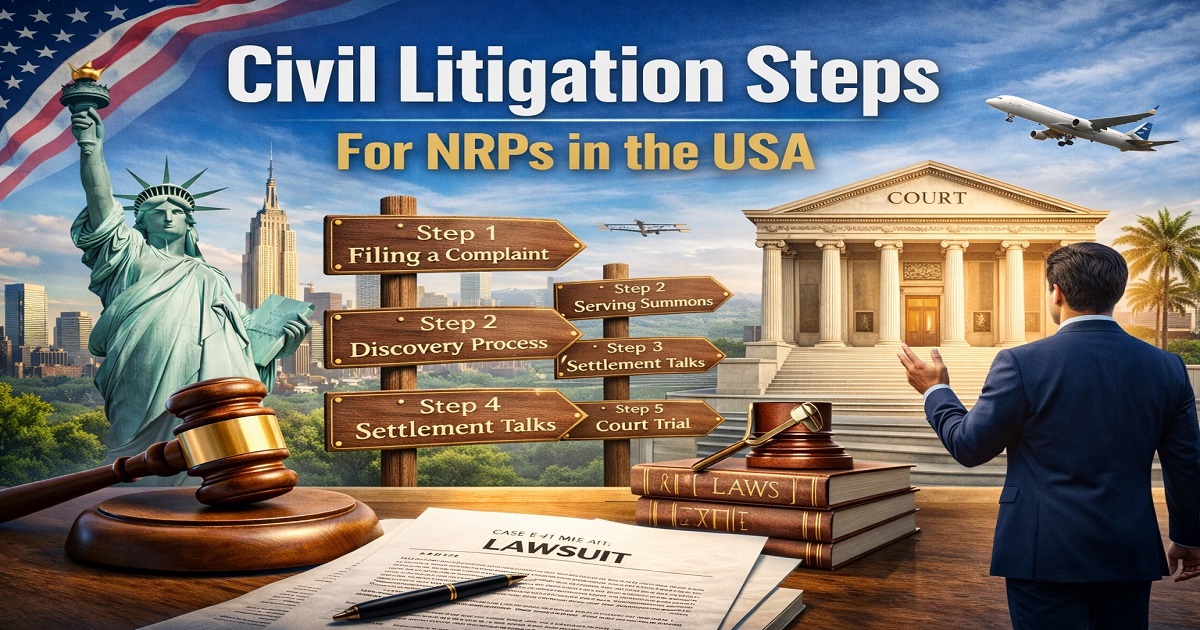
The Property Law Resources For NRPs in the USA are the legal services, institutions, professionals, and systems that assist non-resident property owners to protect, administer, and enforce their property rights. These resources were created to provide guidance to those people who own or invest in U.S. property but do not permanently reside in the country or do not live in the country. Find out how much legal fees are when you use a specialist on non-resident property cases in the U.S. in our guide, Attorney Consultation Fees in the USA.
Who Are Non-Resident Persons (NRPs)?
NRPs, or non-resident persons, are persons who hold property in the United States but reside or are not residing abroad. This category can consist of foreign investors, expatriates, foreign business owners and foreign families owning real estate in the USA. The NRPs normally rely on formal legal services to address the disputes, contracts, tenants, sales, and property compliance issues since they are not physically available.
What Are Property Law Resources?
The resources of property law are real estate attorneys, property law firms, title companies, escrows, courts, mediation organizations, and government property offices. These are resources that assist Non-Resident Persons (NRPs) in ownership verification, contract enforcement, lease disputes, tax coordination, inheritance matters and asset protection. They also offer overseas property legal advice to ensure the NRPs are familiar with the U.S. property laws and local regulations and their legal obligations.
How the U.S. Property Legal Ecosystem Supports Foreign Owners
There is a well-developed U.S legal system that helps foreign and non-resident property owners. In the United States, NRPs are able to purchase, sell, lease, inherit, and enforce property rights. The foreign owners are permitted to sue in court, enforce contracts and defend ownership rights as any other resident. Authorized lawyers represent NRPs, do filings, go to hearings, and do communication, so they do not have to be physically present in most situations.
Remote Property Legal Services in the USA
There are numerous companies today that deal with remote property legal services within the USA. These services enable NRPs to manage property issues by using a video conference, digital signature, online filing, and legal representation. This will allow resolving conflicts, enforcing contracts, handling tenants, and executing property deals without the need to visit the United States. You can also refer to our article, Online Legal Services vs In-Person Attorneys: Which Is Better When. It comes to Your Legal Needs? In addition, when comparing a remote and in-office legal counsel, you may find this article quite useful.
Property Law Resources For NRPs in the USA
In the case of Non-Resident Persons (NRPs) (Foreign Nationals) in the US, the property law resources are oriented towards FIRPTA tax regulations, state-specific restrictions on investments (such as California agricultural land laws), and general property topics (ownership (fee simple), conveyancing, zoning, eminent domain), and can be used to provide insights into intricate ownership structures and procedures.
Key Considerations for Non-Resident Persons (NRPs)
In the case of NRPs (non-resident persons), the United States can provide them with good legal protection of their property, but it is associated with responsibilities and other particular challenges. Those are the main considerations that NRPs should understand in order not to have any legal issues, manage costs, and secure their investments. To estimate the normal legal costs in more detail and their effect on NRPs, see the article, Legal Fees for Contract Enforcement in the USA (2026 Cost Guide and Examples).
Understanding U.S. Property Laws and Local Rules
Not all states in the U.S. share the same property law. Regulations regarding ownership, landlord tenant relations, taxes and transferring of property may vary enormously. The NRPs are encouraged to consult overseas property legal advice in order to know the federal laws as well as the local state laws that can influence their property.
Choosing the Right Legal Support
Since NRPs do not exist physically, it is important to settle on a qualified property lawyer. The right lawyer will be able to defend you in court, gather documentation, and liaise with the authorities on your behalf. The USA provides the possibility to do the majority of legal transactions online with the help of firms that provide remote property legal services and helps to save on traveling and time wasted.
Managing Legal and Compliance Costs
NRPs are to anticipate constant legal expenses on consultations, contract reviews, dispute management, and compliance. Early budgeting of legal services prevents emergencies when decisions are made in a hurry thus escalating the costs.
Property Management and Third-Party Authority
Majority of Non-Resident Persons (NRPs) depend on property managers, agents or family members. Legally drafted powers of attorney and management agreements must be used. Correct legal filing keeps NRPs safe against fraud, misappropriation of money and unauthorized property judgments.
Taxation and Reporting Responsibilities
Special U.S. tax and reporting requirements are usually imposed on foreign and non-resident owners. The coordination of legal and tax regulations must be taken into consideration to remain in compliance with the laws particularly in the process of earning rental income, selling property, or inheriting assets.
Dispute Resolution from Overseas
Even when you are out of the country, tenant wrangles, property problems, or breach of contract may occur. The NRPs have to provide their legal team the ability to transact negotiations, litigation, and enforcement remotely. Good lawyers will defend the interests of NRPs even when they are not in the United States.
Top Resources & Databases
With NRPs, there should be access to the appropriate official resources and databases. Through these platforms, the ownership can be verified, legal records followed, compliance can be managed and disputes readily resolved usually without the need to be present in the United States.
U.S. County Recorder & Land Registry Offices
Offices of Recorder (also known as Register of Deeds or Land Records Office) exist in every county in the U.S. These are the offices where there are official records of property such as deeds, mortgages, liens and transfer of ownership. Through these databases, NRPs are able to verify ownership, title history and observe any unauthorized filings reported against their property.
County Assessor & Property Tax Databases
The websites of county assessors include valuations of property, tax records and an overview of ownerships. These databases enable NRPs to monitor the taxes paid on properties given on a yearly basis, check on the assessments, and make sure that taxes are being duly maintained. Numerous counties offer any public online search tool which may be used internationally.
State Court Case Search Systems
The United States has most states with services such as online court databases where users can search civil cases in addition to property issues, eviction, and contract litigation. These are tools that can enable the NRPs to track the litigation in progress, confirm filings, and track the case development as their lawyer proceeds with the formal representation.
U.S. Department of Housing & Urban Development (HUD)
HUD offers property ownership regulations, housing rules, fair housing, and landlord-tenant regulations. In the case of NRPs renting American property, HUD resources are used to determine the compliance obligations and the rights of tenants.
Internal Revenue Service (IRS) Property & Foreign Owner Resources
The Internal Revenue Services (IRS) offers official guidance on property-related taxes, tax reporting of rental income and the mandatory actions on foreign ownership including the regulations of FIRPTA. The resources are necessary because NRPs should know the tax exposure associated with the purchase, sale, or receipt of income related to U.S. property.
Title Companies & Title Insurance Databases
Title companies have ownership verification systems as well as lien-check tools. When buying and selling property and inheriting property, NRP tends to use these services to make sure there is clean ownership and legal security against any past claim.
Professional Legal Databases (Used by Attorneys)
Property lawyers do not necessarily make use of published sources, but they may consult professional legal databases in order to study statutes, precedent cases, zoning regulations, and enforcement processes. Overseas property legal guidance and remote property legal services in the USA provide NRPs access to these potent research tools indirectly, by not requiring them to subscribe themselves.
Understanding Non-Resident Property Ownership in the USA
The US permits foreign investors and foreign nationals the legal ownership of real estate. The USA has well established and legal protection of non resident property ownership, which makes the country one of the most preferred places in property investment among international investors. Nevertheless, there are legal liabilities and risks associated with ownership rights that NRPs have to be aware of.
Ownership Eligibility
The United States does not impose any citizenship or residency restrictions on property purchase or ownership. Most countries allow people to buy residential, commercial or investment property lawfully. This free attitude is a reflection of long-established international ownership rules on property where foreign individuals and entities are permitted to own United States real property either directly or indirectly through companies and trusts. Although there are broad ownership permission, individual states might impose further regulations on agricultural land or property within sensitive areas.
Legal Personality of Non-Resident Owners
The USA has a strong protection of property rights of non residents. Just like the citizens of the U.S., NRPs are able to purchase, sell, lease, inherit and transfer property. They can also legally enter contracts, initiate lawsuits, defend against claims and establish ownership in the American courts. This allows non-resident owners to have attorneys or agents represent them, thus it is possible to maintain and protect property without residing in the United States.
Risks NRPs Should Understand
Non resident property ownership in the USA is risky despite the high security measures. They are tax obligation, reporting requirement, tenant and management dispute, title defect, fraud, zoning and enforcement of contract. Since laws differ across states, the misinterpretation of local regulations can subject NRPs to financial costs or litigation. The rules of international property ownership are also compatible with the U.S. tax/compliance systems, and, therefore, the professional legal and tax advice is required.
Why NRPs Need US Property Legal Help
Full citizens of the United States that are not residents are known as NRPs (non-resident persons), and they have distinct difficulties in owning property. Although U.S. law permits foreign ownership, it is not an easy task to run property rights of a different country. That is why the US property legal assistance of non residents is necessary. Organized legal assistance secures investments, compliance, and enables NRPs to manage property issues without having to be physically present.
Foreign national property compliance has become one of the main reasons NRPs should seek legal help. Non-resident owners should comply with the U.S. federal, state, and local property regulations, tax and reporting requirements, which are usually not the same as those imposed on residents. Late filings, breaking of rental laws or a misconception of ownership may cost penalties, litigation or deprivation of rights. It is up to lawyers to lead NRPs through this set of requirements and ensure they remain legally protected.
The distance and limited control is also another crucial aspect. The third parties that NRPs frequently depend on are property managers, agents, or relatives. In the absence of appropriate legal frameworks, this poses a danger. The overseas property owner legal services in the USA make the powers of attorney, management contracts, leases and financial controls legally drafted and enforceable. This minimizes chances of fraud, mismanagement and fraudulent transactions.
Types of Property Law Resources Available for NRPs
The United States offers an extensive set of legal services to non-residing property owners in order to secure ownership rights, control risks, and comply with laws. The following are the principal property law sources that are accessible to NRPs.
Property Lawyers and Real Estate Attorneys
The role of a property lawyer to NRPs in the USA is to safeguard non-residents. These practitioners deal with contract, title examination, lease, dispute resolutions and court representation. There is also a real estate lawyer that represents the foreign owners of property in the USA who can help in the purchase and sale of property, inheritance, tenancy, and enforcement of property ownership. Their legal skills would allow NRPs to operate the U.S. property safely and in compliance with the law.
Remote and Online Legal Support
In the USA, remote property legal services are currently the focus of many law firms that offer NRPs full legal support without having to travel. With the help of video consultations, remote signing of documents, and electronic case management systems, overseas owners may be able to work with property issues. This type of foreign property legal advice is particularly useful to the NRPs that require continuous legal assistance in compliance, disputes, or foreign property transactions.
Property Management Legal Assistance
Another resource is legal assistance concerning property management. Legal services to NRPs in US property management include lease preparation, tenant compliance, eviction, rent recovery, management contract and supervision of third-party property managers. These services guarantee that the properties of NRPs are legally covered, managed, and in accordance with the regulations of housing and rentals in the U.S.
Government and Regulatory Property Resources
The Non-Resident Persons (NRPs) also enjoy the advantage of being able to access the wider ecosystem of the US property law. This comprises land record offices, housing authorities, tax agencies, zoning departments and civil courts. These organisations control ownership, taxation, building and dispute resolution. Knowing the cross-border real estate law in the USA will assist NRPs in navigating the interaction of U.S. property laws with international ownership structures, international investments, and international legal requirements.
Legal Process for NRPs Property in the USA (Step-by-Step)
The legal process of NRPs property in the USA is a crucial area to gain insight into in order to secure investments and prevent legal issues. Although there is no limit on the property legally owned by non-residents, all the procedures, starting with the purchase and ending with a sale, have to rely on the U.S. laws on property. The mechanism can be described in rather simple steps as follows.
Buying Property as an Non-Resident Persons (NRPs)
Sale and purchase of property in USA as an NRP is perfectly legal. Without U.S. citizenship or residence, NRPs are allowed to buy residential or commercial property or investment property. The process of law normally starts with an offer, signing the contract and due diligence. Before closing, a real estate attorney goes through the agreement, verifies the title, and does not find any legal flaws, liens, or property control problems.
Registration and Ownership Transfer
Once bought, the property is to be registered in the local county land records office. This move formally makes the ownership part of the NRP by name or legal entity. Registration secures rights of ownership and a legal book of record. Title insurance is commonly taken out in order to protect against claims or errors in the documentation history.
Compliance and Legal Responsibilities
In the USA, NRPs property includes a very important legal procedure of compliance. Non-resident proprietors are subject to federal, state, and local regulations, such as taxation reporting, property upkeep norms, zoning regulations, and housing regulations. Lawyers assist NRPs to be in compliance and escape penalties and fines or enforcement measures.
Renting and Property Use
In case an NRP rents out property, there are other legal conditions. Lease agreements have to be in compliance with local requirements of landlord-tenant laws and rental income has to be duly reported. Legal attorneys aid in lease writing, tenant conflict resolution, eviction, and compliance of property managers with the law.
Selling Property as an Non-Resident Persons (NRPs)
The process of purchasing and selling real estate in the USA as an NRP requires legal examination, contract negotiation, taxation, and appropriate closing. Attorneys also deal with sale contracts, facilitate title transfers, facilitate escrow and make sure that foreign-owner tax obligations are taken care of prior to release of funds.
Dispute Resolution and Legal Protection
Tenants, contracts, boundaries, ownership rights or payments may be the subject of dispute. NRPs are legal entities in the United States. Lawyers will be able to settle, sue, defend, and impose judgments. Through appointed legal representation, most of the disputes can be addressed remotely.
Documents Required for NRPs Property Matters
It is a complicated paperwork to manage or own property in the United States as a non-resident. The availability of the necessary paperwork guarantees the seamless dealings and safeguards the ownership rights and helps in ensuring compliance of property belonging to the foreign nationals. The following are the primary documents needed by NRPs property issues in the USA.
Identity and Ownership Documents
NRPs are required to present a valid identification like a passport and in the event of the applicant being a visa holder or tax holder, the identification must be visa identification or tax identification. Documents related to ownership are title reports, title insurance policies, and deeds to properties. Such records are legally set and ensure that no hidden claims or defects are present.
Purchase and Sale Agreements
Formal contracts are mandatory whenever purchasing or selling property. These comprise purchase agreements, closing disclosures, escrow documents and transfer deeds. They are some of the most vital documents needed by NRPs property in the USA because they create legal requirements and legal transfer of ownership.
Tax and Compliance Records
The foreign owners should keep tax records, including U.S. tax identification numbers, property tax records, and income reporting documents. In case of foreign national property compliance, compliance paperwork is much needed particularly in earning rental income or selling of property. Late or wrong documents may result in fines or delay of transactions.
Leasing and Management Documents
When the property is rented out or handled by a third party, NRPs require legally prepared lease contracts, property management contracts and records of tenants. There can also be a need to have powers of attorney that will permit lawyers or managers to represent their owner in legal or financial affairs.
Dispute and Enforcement Documents
With regard to legal matters, the NRPs have to retain copies of contracts, notices, court filings, settlement agreements, and judgment records. The documents will aid enforcement measures, protect rights, and enable the attorneys effectively represent NRPs.
Key US Real Estate Laws NRPs Must Understand
The United States has strong protection of property ownership by non-residents, but also it is highly regulated. Knowing the law system will allow NRPs to avoid punishment, decrease risks, and safeguard investments. The most significant areas of real estate law should be known by every NRP in the United States, which is listed below. A curated list of real estate law references and tools can be found on the Real Estate Research Online resources page by Villanova Law.
Ownership Laws
Most US real estate regulations permit non-US citizens and non-residents to buy, own and sell real estate, without the need of citizenship or residency. NRPs may possess property personally, on companies, or trusts. The property rights of non residents of USA are legally secured and therefore NRPs may lease property, make contracts, and enforce ownership rights in the U.S. court. Depending on the state, there might be some restricted limitations on agricultural land or property which is near a sensitive government area.
State vs Federal Authority
The U.S. real estate law is mainly state controlled. This implies that property regulations, landlord, tenant laws, registration, and court systems differ according to state. Taxation, reporting of foreign ownership and national security are some of the areas where federal law typically applies. This balance is also crucial to comprehend cross-border real estate law in the USA because NRPs have to meet the federal standards as well as the state-specific laws in which the property is situated.
Rental Laws
The state and city rental regulations vary widely. These are laws that control lease terms, tenants rights, eviction process, maintenance of property and rent. NRPs renting property should observe local laws concerning landlords and tenants strictly. Offences may result in legal action, penalties or limitations of use of the property, notwithstanding the fact that the owner is abroad.
Tax Exposure
One of the areas that Non-Resident Persons (NRPs) find complicated is tax obligations. Foreign owners are liable to tax on property, rental income, requirement of withholding and taxation on capital gains at time of sale. The federal regulations like FIRPTA are layered on top of state taxation systems, so cross-border real-estate law in the USA is particularly of significance to non-residents. The coordination of laws and taxes is very important to prevent penalties and delays in transactions.
Transfer and Inheritance
Transfers, gifts and inheritance of property are governed by state property laws as well as federal tax laws. Poor planning can also lead to frozen assets, delays with probate or tax surprises because the deed, will, trust, and beneficiary structure is not legally valid in U.S. Having knowledge of the application of the US real estate laws that govern foreigners in matters of inheritance and transfers assists NRPs to safeguard the long-term ownership interests.
Best Property Law Resources for NRPs in the USA
To handle the U.S. property safely, NRPs require access to legal information, professional assistance, and official systems that are reliable. The most useful property law materials are those that have combined guidance provisions as well as the legal powers and being remote. The following are the most significant types of resources which offer non resident US property legal assistance. Independent legal researchers and NRPs can access free legal research resources at Harvard Law Library’s Foreign & International Law Page.
Legal Platforms
General information on property law, explanations of contracts, compliance advice, and court reports are some of the aspects of legal platforms. Such websites assist NRPs to know the ownership regulations, dispute choices, documentation, and the procedure to follow before talking to a lawyer. Most of them also provide educational support, law updates, and simple templates that facilitate overseas property law advice and pre-emptive decision-making.
Lawyer Directories
Lawyer directories should also be used to locate competent real estate and property lawyers who are familiar with dealing with non-residents. These directories enable the NRPs to search by geographical location, specialization, language and international experience. They match foreign owners with lawyers and paralegals that offer US property legal advice to non residents such as contract drafting, litigation, compliance, and distance legal representation.
Government Portals
The U.S. property legal system is based on government portals. These are the county land record offices, the court systems, the tax authorities, and the housing agencies. With these portals, NRPs can check ownership, check deeds, track court cases, track property taxes and get a feel of what the regulations entail. These are the official resources that are used to promote transparency, legal protection, and enforcement of property rights.
Compliance Services
The compliance services assist NRPs in coordinating taxes and meeting reporting requirements, regulatory filing requirements, and monitoring legal requirements. These services assist foreign owners in satisfing foreign-ownership, and rental compliance criteria as well as transfer regulations. To NRPs who handle property internationally, compliance services act as a vital component of foreign overseas property legal counsel, where they aid in mitigating risk, avoidance of fines, and legal retention of ownership.
Common Legal Problems Faced by NRPs
The ownership rights of NRPs (non-resident property owner) in the United States are quite good, although distance and lack of knowledge about local laws tend to make them vulnerable to litigation. Knowing the most frequent issues can enable NRPs to be proactive and address the appropriate legal assistance in the initial stages.
Title Disputes
Title disputes arise when issues are raised concerning the ownership of a property. These issues can include boundary issues, recording mistakes, unrecorded liens or conflicting claims of ownership. Title issues particularly constitute a severe problem to NRPs since that can prevent sales, rentals or financing. The USA NRPs lawyer dealing with property issues assists in researching title history, rectifying records, and litigating against the claims of ownership.
Tenant Conflicts
The most common issue that NRPs encounter is tenant disputes. They are unpaid rent, breaking of leases, property destruction, unlawful occupation, and difficulties in eviction. Legal advice provides a proper enforcement of lease, eviction procedures that are adhered to and guard against tenant claims.
Fraud Risks
NRPs are perceived to be fraudulent targets since they are not in person. Fraud is prevented through legal control, documentation, and professional monitoring to offer legal redress in case of malfeasance.
Tax Non-Compliance
U.S. taxation regulations are complicated to foreign property owners.The control of the property assets and compliance is necessary to coordinate legal and taxation.
Contract Breaches
Violation of contracts occurs in the construction works, property management contracts, sale contracts or service contracts. NRPs can lose money or be exposed to legal liability in cases where parties are non-compliant. The NRP is a lawyer in the USA, who will help resolve property issues, contract resolution, litigation, and compensation claims.
How to Choose the Right Property Lawyer or Resource
One of the most significant decisions that an NRP can make is the decision regarding the selected legal assistance. The better your lawyer or other legal resource is, the better your property will be safeguarded, the easier the issues will be resolved, and the less risk you will risk in the long term. These steps can assist you in making a smart decision whether you require constant guidance or help in addressing a particular issue.
Lawyers Vetting and Credentials</h3>
Always ensure that any property attorney representing NRPs in USA is licensed in a state where your property is situated. Exam
ine their work experience, age, areas of specialization. Specifically seek experience in dealing with non-residents, foreign owners or cross-border property.
Knowledge of Cost Structures
Ask any lawyer or service to provide a break down of costs before hiring. Inquire about their hourly rates, flat rates, or retainer and services offered. There are no uncertainties about costs because clear agreements protect against unforeseen legal bills and shield NRPs.
State-Specific Expertise
The United States property law is predominantly a state one. It implies that legislation concerning property ownership, rentals, taxes, and settlements vary in any given state. The resource or lawyer you hire should have firsthand experience in the state on which you have a property. State experience facilitates compliance, proper filings and suitable and efficient local laws and court practices.
Online Safety and Remote Reliability
Since NRPs frequently access distal legal assistance, the safety of the web is essential. Use official websites, legal directories, and secure communication. Do not use unconfirmed agents, social platforms requests, or companies that are not willing to submit credentials.
Cost of Using Property Law Resources in the USA
The expense of availing property law resources in the United States relies on the kind of assistance required and the complexity of the property issue at hand. In the case of NRPs, the cost can be between minimal legal consultation sessions and long-term management and dispute representation. Being aware of these areas of costs is beneficial to the overseas owners in that they can budget accordingly, and are not caught with legal costs they had not anticipated. For accurate legal definitions and access to U.S. property statutes and case law, visit the Legal Information Institute at Cornell Law School.
Consultation Fees
The majority of property lawyers will charge you an initial consultation fee to look at your case, review documents and give you initial advice. These charges depend on the experience and the location of the lawyer. Through consultations, there are usually contract review, ownership assessment and risk explanation. Premature legal advice will help in avoiding unnecessary expenses and minimizing the long-term legal liability.
Documentation and Transaction Costs
Documentation expenses are associated with having lawyers draft purchase agreements and sale contracts, leasing documents, power of attorney, title corrections or filing compliance. Such services are legal drafting, record checks, and official filings.
Costs of Dispute and Enforcement
Costs are high when there are legal disputes. Such disputes can include title disputes, tenant disputes, breaches of contract or fraud. Such legal costs would include preparation of cases, filing in court, negotiations, hearings and even litigation.
Property Management Legal Support
A large number of NRPs rely on legal facilities to assist in property management. This involves preparation of management contracts, dealing with tenant compliance, review of lease enforcement efforts and overseeing third parties managers. Certain lawyers are also providing unlimited legal services to NRPs who would prefer to have their cases monitored constantly. Although this results in recurrent legal expenses, it can usually avert significant conflicts, fraud, and non-compliance.
Final Guide to Property Law Resources for NRPs USA
It is legal, well-organized, and highly secure to own property in the United States as a non-resident. Nevertheless, safe ownership does not occur automatically. It relies on the appropriate property law resources and the knowledge of the US property legal ecosystem mechanisms. The U.S. legal system has provided a full spectrum of services that assist overseas property owners through land record offices and courts, licensed attorneys, compliance services, and regulatory bodies.
To NRPs, through this ecosystem, they can purchase, register, rent, enforce, and sell property under the same legal status as residents of the United States. With the services of qualified lawyers and organized legal platforms, NRPs are able to get consultations, fix disputes, handle tenants, and safeguard their ownership rights without having to be physically present. It is this network that converts the international property ownership regulations into workable protection, providing foreign owners with an unconstrained legal avenue by which to protect their investments.
FAQs
1. What are the best property law resources for NRPs in the USA?
Reliable property legal sources are licensed real estate lawyer services, government websites, legal service websites, and legal compliance consultants.
2. Can NRPs legally own property in the USA?
Yes. The USA allows non-resident Pakistanis and other citizens of countries full ownership of property.
3. Do NRPs need a property lawyer in the USA?
Although optional, the legal risk, fraud, and documentation mistakes are minimized when a property lawyer is hired.
4. What documents do NRPs need for U.S. property matters?
Typically passport, proof of funds, tax identification number, property contracts, and title documents.
5. How can NRPs manage property issues remotely?
Online resources on property laws, online consultations, and licensed property management companies can be used by NRPs.
6. What legal problems are most common for NRPs?
Title cases, tenant cases, tax compliance cases, inheritance, and breach of contract.
7. Are online property law resources reliable?
Yes, when they are those platforms that are licensed by the state, checked networks of attorneys, or the official governmental portals.
8. How much do property law services cost for NRPs in the USA?
Prices vary according to services, and a low-cost consultation is comparatively less than a dispute and full representation.