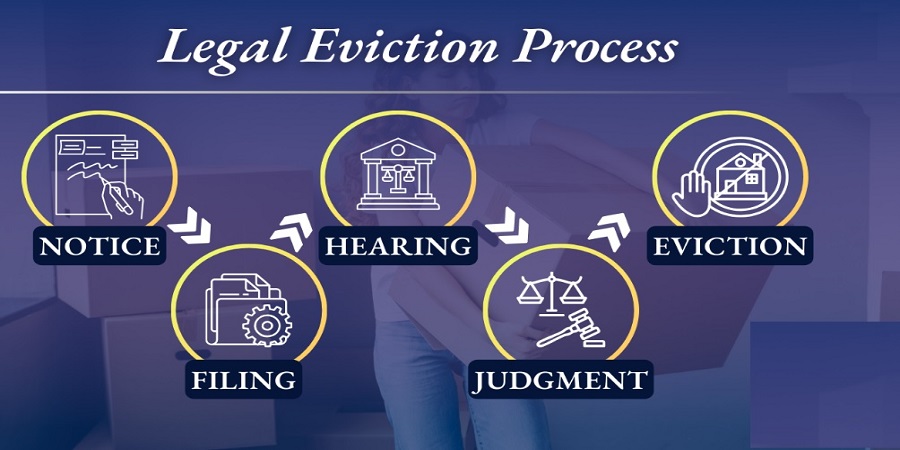
Law Ki Dunya provides a detailed state guide on the legal process for eviction in the USA. The Eviction is a device used by the landlord to dispose of tenants, typically when rent is being withheld, the lease is not being complied with or the terms are not being met. As eviction may seem an easy task, it should be conducted in accordance with the local, state, and federal regulations, so both tenants and landlords find it rather complicated. Learning this legislation system will avoid conflicts, penalties, and time wastage.
What is Eviction?
Eviction cannot be a simple request that a tenant wants to move out. It is a legal process through which an official notice is made; a court filing and at times a court order to remove. The various jurisdictions have different notice periods, grounds and protections. To landlords, due course of action renders the eviction enforceable, and limits the chances of being sued. To tenants, awareness of their rights prevents unjust eviction and gives tenants an opportunity to dispute the procedure.
Why Understanding the Legal Process Matters
The awareness of the eviction process ensures the protection of the property rights of the landlords and assists them in recovering the unpaid rent or damages in courts. It also prevents errors that may nullify the eviction or lead to loss of money. In the case of tenants, awareness will also guarantee that they are treated fairly and they may even bargain with the payment schemes or solve breaches to the leases. Legal advice assists the two parties not to get into an unnecessary conflict.
Eviction is serious. Through the proper knowledge, the landlords can be in charge of enforcing the rights in a responsible manner and the tenants can defend themselves against illegal eviction. The knowledge of the process facilitates compliance and encourages fair and equitable results.
Grounds for Eviction in the USA
The U.S. only permits eviction under some conditions. Being aware of these grounds allows the landlords to operate within the legal system and enables tenants to be aware of their rights.
Non-Payment of Rent
Failure by a tenant to pay on time will be considered as one of the most common reasons. A written notice, commonly referred to as a pay or quit notice, will be distributed by the landlords giving a fixed timeframe to pay before initiating court proceedings. This makes the process legal and enforceable.
Lease Violations
Eviction can also occur to tenants who violate the conditions in leases. The common offences are unauthorized pets, destruction, or unauthorized sub-letting. Providing time to put things right, landlords are required to notify the tenant and go on, in case of necessity.
Illegal Activity
Any illegal activity on the property like drug dealing or other crimes is a severe eviction reason. Landlords are expected to photograph the activity and usually report to police. The courts handle cases fast due to the severity of the offense.
Holdover Tenant Situations
A tenant who does not leave at the end of the lease has become a holdover tenant. The eviction may be initiated by the landlords who want to reclaim possession, however, with an appropriate notice and legal process.
The awareness of these grounds will make landlords work within the law and tenants know their duties. The right procedure eliminates conflicts and protects rights.
Federal and State Laws Governing Evictions
The eviction laws in U.S. are a mix of federal and state laws. The landlords and tenants should be familiar with these regulations so that the process remains legal and the rights are not infringed.
Summarization of Federal Guardians.
The federal law offers some protections that can interfere with evictions particularly in areas like the elderly tenants, disabled people, and families receiving federal housing assistance. An example is the Fair Housing Act, which does not allow discrimination on the basis of race, color, religion, sex, or national origin, disability, or familial status in the eviction. There are also other notice requirements of the federally assisted housing tenants before eviction so that they cannot be ousted without due process. These safeguards provide a standard that is applicable in every state.
The Differences in Eviction Laws.
Whereas federal laws offer blanket protection, individual states have regulations on the eviction process, notice time, and the rights of tenants. Other states have longer notice days of non-payment or obligatory mediation before filing. There can be limits placed on the termination of leases and recovery of possession by the landlords by others. An example of this is that in California, a landlord should provide a 3-day notice of nonpayment when other states can take 5-10 days to do the same. It is important to learn about state-specific rules since their breach will nullify an eviction or cause legal penalties.
The knowledge of both federal and state laws will enable the landlords to exercise their rights appropriately without treating the tenants unfairly. The awareness of such laws will minimize the chances of conflicts, prevent legal fines, and assist in making the eviction smoother to all parties.
Notice Requirements Before Filing for Eviction
In the U.S., prior to the filing of an eviction, the tenants need to receive written notice by the landlords. The kind of notice will depend on the reason why the eviction is being done and will provide the tenants with an opportunity in correcting the problem or to make a preparatory move.
Pay or Quit Notice
A Pay or Quit notice is applied in a situation where the tenant has defaulted in paying rent. It informs the tenant that he or she has to remit the past due rent within a given time frame commonly 3 to 5 days based on the state before the process of eviction starts. It provides the tenant with a last chance to pay his/her debt and continue living in the property.
Cure or Quit Notice
The Cure or Quit notice is emitted in case a tenant has breached a condition in the lease that includes keeping an unlawful pet or damaging the property. It gives the tenant a specified time which is usually 3 to 30 days to rectify the violation as provided by the local law. In case the tenant fails to fix the issue in question within the stipulated timeframe, the landlord may evict him or her.
Unconditional Quit Notice
Unconditional Quit notice is one that directs the tenant to vacate the premises without getting a chance to rectify the situation. This warning is normally issued in case of serious breach of lease or repeated offence even in the case of unlawful activity. The period of notice is state dependent but often it is between 24 hours and a few days.
The proper type of notice and following the timeline as required by law is very important. Giving sufficient notice helps landlords avoid court litigation and have tenants treated in a just manner. The states have their individual rules to follow and landlords have to ensure that they confirm local requirements before acting.
Filing an Eviction Lawsuit
After the notice period has elapsed and the tenant failed to do so, the landlords may file a formal eviction suit commonly referred to as an unlawful detainer action. Knowing the procedure of the filing makes the eviction legally obligatory.
Where to File
Cases involving eviction are usually taken to the local district or superior court where the rental property falls. The specific court is based on state and county rules. The court where one files the case is therefore very crucial since filing in the wrong court may delay the case or dismiss it.
Required Forms & Documentation
The process of eviction requires landlords to file certain forms. The most frequently used documents are a duly filled eviction complaint, a copy of lease or rent agreement, evidence of the service of eviction notice and a record of unpaid rent or breach of lease. Having a well-documented case is a strength and it shows that the landlord did not violate any of legal procedures.
Court Filing Fees and Timetables.
Eviction lawsuit entails payment of court fees depending on the state and county. Fees are normally between 50 and 250 dollars according to jurisdiction. Once the filing has been done, the court sets a hearing, which is usually between 7 and 30 days. A summons and complaint are served on tenants and they have the right to respond. Meeting the deadlines and submitting them on time make the process run well and minimize chances of delay or dismissal.
By the proper filing process the rights of the landlords are guarded and at the same time the tenants receive their fair treatment. How the court requirements are understood and due preparation raise the chances of a successful and efficient eviction.
Serving the Eviction Notice
It is important to serve an eviction notice. When the proper service is made, the tenant will be duly notified and the eviction made legal.
Methods of Service
Depending on state laws, eviction notice may be served by various means. Much used are personal delivery by the landlord or process server, substituted service by leaving the notice with another adult at the premises or by leaving the notice on the door, and sending through certified mail. The key to the successfulness of the notice is the selection of the appropriate approach.
Proof of Service
Once the notice has been provided, it is the responsibility of the landlords to show that they have done so in court in case the eviction proceeds. This may be a signed receipt or an affidavit by the person who issued the notice, or a postal receipt of certified mail. Evidence of service shows that the tenant is duly notified and also the landlord cannot be subject to unjustified eviction.
Importance of Correct Delivery
Mistaken delivery may postpone the process or result to dismissal. Courts are strict on the notice requirements such as the method and timing. Maintaining a proper service ensures the landlord and the tenant are not violating the law, minimize disputes, and protect rights.
Court Hearing and Tenant Defense
Once the lawsuit is filed with the notice, the case is subjected to a court hearing. It is important to know what occurs at this stage.
What Happens at the Eviction Hearing
In the hearing, both parties argue in the presence of a judge. The landlord justifies the reason, provides documentation of the reason like lease agreements and records of payment, and answers to claims of defense by the tenant. The tenant can oppose the allegations of the landlord or request the landlord to give him more time to fix the circumstances. The judge reviews the evidence and arguments and comes up with a decision.
Common Tenant Defenses
Tenants can claim inadequate notice, neglect by the landlord in the property maintenance, retaliation over a habitability complaint, or discrimination. They can also challenge the owed rental fee or argue that the eviction is against the state or federal protection. The awareness of these defenses assists the landlords in their preparation and makes the tenants be aware of their rights.
Landlord Evidence Checklist
Eviction is dependent on good documentation. The landlords are expected to maintain full lease agreement and records of payment, copies of all notices served, photos or records of violations, and any correspondence between the tenant and landlord. Formatted evidence enhances the case, justifies legal assertions and minimizes chances of delays or dismissals.
Preparation to the hearing would help in ensuring that the eviction is carried out in a cordial manner without violating the legal rights of both parties. A fair resolution depends on proper documentation, knowledge about the defenses of the tenants and legal procedures.
Learn more about Property & Civil Law Guides in the USA
Judgment & Writ of Possession
When the court decides in favor of the landlord, the second step is to get a judgment and, in case of need, a writ of possession to legally evict the tenant.
Winning the Case
A possession judgment is awarded should the judge decide in favor of the landlord. This legally establishes the right of landlord to repossess the property. The decision can also involve a financial compensation of rent unpaid or damages where necessary. The case may be won, but additional measures are needed to make the decision of the court effective.
Sheriff Enforcement
Once a judgment has been made, the landlord can secure a writ of possession at the court. The writ is a mandate that law enforcement can use to remove a tenant who refuses to leave on his/her own. The law enforcement is normally the local sheriff. The eviction is organized by the sheriff, who informs the tenant about it and ensures the property is cleared with all safety and legality. Without this legal approval, the tenants cannot be removed by the landlords.
Timeline to Remove Tenant
The state-specific schedule of enforcement ranges from a couple of days to several weeks after the writ. Delay may be in the form of court schedules, tenant appeals or other processes. This timeline awareness will allow the landlords to organize the transition and make the eviction legal.
Following the right judgment and enforcement processes shields the landlords off litigations and secures the rights of tenants during the process.
Costs & Financial Recovery
Eviction involves getting the property back and compensating the lost money. It is because with knowledge of recoverable costs, landlords are able to safeguard their investments.
Back Rent
One of the greatest concerns is unpaid rent. It is available to landlords to have back rent judgment. Proper records- lease agreements, payment records indicate the owed amount. The repayment is enforced by the courts in case the debt is evidently established.
Damages
Repairs, cleaning fees or replacement of fixtures due to damage caused by tenants can be recovered by landlords as costs other than normal wear and tear. The claim is reinforced with evidence such as photos, invoices, inspection reports.
Legal Costs and Attorney Fees
The terms of the lease can in most states enable the landlords to earn attorney fees as a result of the legal representation and the filing expenses. The inclusion of these charges in the claim will reduce the total eviction cost.
Knowledge of cost-recovery alternatives will guarantee equitable compensation and adherence to law. Effective documentation and procedures ensure high probabilities of successful recovery of finances.
Tips to Avoid Eviction Disputes
Unambiguous and respectful dialogue eliminates confrontations. Late payments, violations, or other issues should be addressed immediately by the landlords. The first talk can result in mutual agreement on a solution- payment arrangements, corrective measures, and evasion.
Proper Documentation
Good record keeping also safeguards both parties. The landlords are required to retain lease agreements, rent receipts, notices and correspondence relating to violations. Tenants are supposed to retain records of payments, maintenance requests and correspondence. These records will provide evidence in case of disagreement and legal action.
Mediation and Alternatives
Mediation avoids the emotional and financial expenses of eviction. Landlord-tenant mediation by a neutral third party is offered by communities. Conflicts can be solved through rent repayment plans, lease amendment, and temporary accommodation in order to save the relationship.
Effective communication ahead of time, in-depth documentation, and seeking an alternative such as mediation can lessen the dispute cases of eviction, save on time and money and establish a win-win situation between landlords and tenants.
Examples and Case Scenarios
The real life examples of how eviction process works in practice are presented.
Sample Eviction Notice
A regular Pay or Quit notice notifies the tenant of a three days period to either pay overdue rent, or move out. It contains the name of the tenant, address, amount due to be paid, the deadline, and the payment method. Proper delivery of the notice ensures compliance and is a record cardinality.
Timeline Example
Assume that a tenant does not pay rent on Jan 1. On Jan 3, the landlord provides a 3-day Pay or Quit notice. Unless payment is made by Jan 6, the landlord initiates eviction suit. The court sets a hearing Jan 15; in case judge decides in favor of landlord writ can be issued by Jan 20 and enforced by sheriff by Jan 25. This is a timeline of how appropriate actions make the process legal and foreseeable.
The use of real-life examples and timeframes assists the landlords and tenants to visualize the process and generate the expectations and prevent misunderstandings.
Conclusion
Eviction refers to a formal process of law that protects tenants and landlords. The most important ones are: the rightful notice is issued; the suit is filed; the tenant is duly served; the hearing is attended; the judgment is obtained; and enforced with the help of a writ of possession, when necessary. In the process, landlords recover back rent, damages and attorney fees, and tenants have a chance to make their defenses and defend their rights.
The clear communication, detailed records, and strict compliance with federal and state laws constitute the key to preventing disagreements between landlords and tenants. The tenants are advised to be aware of their rights, respond promptly to any notice, and consult an attorney in case of an eviction that they are not satisfied with. Issues that do not require court intervention can be solved through proactive communication, accurate records and mediation.
FAQs on “Legal Process for Eviction in the USA”
What are the legal reasons a landlord can evict a tenant?
When the lease expires and is not renewed or when they do not pay their rent or violate their lease or do an illegal act, evictions generally are permissible.
How long is the eviction process in the USA?
It depends on the state but typically takes between 4-12 weeks between the notice and removal.
Can a landlord evict a tenant without going to court?
No, legal eviction has to be taken through court in near all the states.
What notice must a landlord give before filing eviction?
That necessary notice is dependent on state and circumstance (e.g., 3-day pay or quit, 30 days termination).
Can a tenant fight an eviction?
Yes, the tenants may claim the defenses (improper notice, paid rent, discrimination, or retaliation).
Do eviction laws differ by state?
Yes- there are certain forms and notice periods and procedures in each state.
What happens after the court orders eviction?
The writ of possession is granted and the local sheriff or marshal evicts tenants.