The knowledge of the property boundaries and easements are necessary to ensure the rights of the home owners and the land owners and prevent the expensive lawsuits. Some of the most common property boundary disputes are those involving neighbors in disagreement concerning boundaries of their property. Easement rights outline ways in which other people can use some part of the land to access, or use utilities or community purposes. Proper awareness of such problems can be used to avoid misunderstanding, legal wrangles and loss of money.
House owners should know the boundaries and easements to prevent disputes over a long period. Unclear right of ownership, lack of surveys or lack of understanding with neighbors give rise to many boundary conflicts. As the conflicts escalate, it is good to be aware of the legal process for resolving property disputes in the United States so as to guard your right to own property as well as avoiding such expensive court cases.
Besides the legal issues, property disputes may also be financial such as the impact on taxes or investments. By engaging the correct tax advisor, the financial implications of property matters will be appropriately addressed and will be in line with the U.S. tax policies. Through proper planning and advisory, homeowners and landowners can enjoy the right of their property and their finances.
What Are Property Boundaries?
The boundaries of a piece of land are demarcated by law. They indicate the beginning and endings of a property and the beginning and ending of another property. Boundaries may be depicted as surveyed lines or physical objects like rivers, trees, walls or fences. A clear understanding of your property boundaries is necessary to know your rights, plan and never have any conflicts with your neighbours.
The property boundary issues normally begin when the owners build buildings without verifying the property lines. A row related to fences, walls, or extensions might easily start legal disputes. Thus, it is imperative to know the manner in which neighbor property disputes are solved within the U.S. law before any legal action is taken.
Legal Importance of Property Boundaries
Being aware of your property boundaries will ensure that you conform to the law requirements of property lines. This information is imperative in the planning of construction, landscaping or any other type of improvement since constructing over a boundary may result in legal repercussions. An example is a fence erected across the boundary line, which can lead to an encroachment remedy and the correction or the compensation of an aggrieved neighbor.
Determining Boundaries and Survey Tips
Homeowners and landowners need to know how to identify boundaries of property in legal terms to avoid disputes. The employment of a licensed surveyor will give the correct measurements and will assist in recording the property boundaries on paper. The tips to follow in property surveys include conducting research of historical deeds, viewing maps and ensuring that you confirm the markers, to minimize the chances of conflicts and to ensure that your property rights are upheld.
Feeling proactive by learning your property boundaries and legal responsibilities, you will be able to protect your rights and enforce them successfully without breaking the local laws.
Understanding Easements
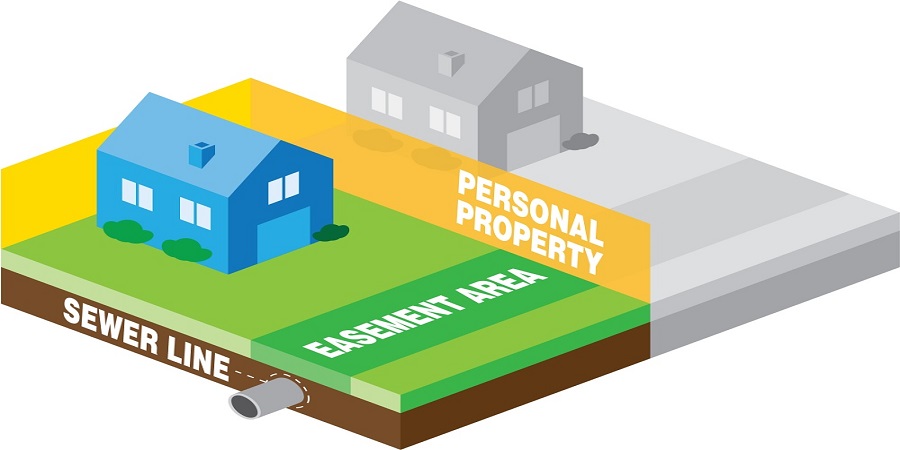
An easement is a lawful privilege which permits an individual to utilize a part of the property of another individual to a certain end. Knowledge of easements is vital so as to prevent arguments and also be sure that property laws are adhered to by the homeowners and landowners. Easements can affect residential houses particularly shared driveways and access roads. Most homeowners find themselves in a challenging situation as they realize their legal responsibilities when a conflict arises. When informed of the real estate easement laws and entitlement to rights by the homeowners, you will be able to prevent abuse and ensure that all people have a legal access.
Common Types of Easements
Easements in the law of property are of several types. Right-of-way easements permit shared access (e.g. shared driveway easements or walking paths), with the neighbors or the general public having restricted access across the ground. Utility easements authorize firms to install and maintain utilities such as water, electricity or gas lines. Prescriptive easements occur when property has long term, constant and open use, and it is commonly accepted as a legal easement after a few years.
Easement Rights and Responsibilities.
Easements of residential properties must have a clear understanding of the rights and obligations of each party. In our case, when neighbors share a drive, they establish residential property easement where they have specific regulations regarding maintenance, access and use. Awareness of such responsibilities helps to avoid any conflicts and peaceful coexistence.
Property Easement Examples
Examples of concrete ones are a fact that a neighbor can access your land to reach a common road or a utility company with underground pipes or permission to be used long-term and for recreation. The realization of these situations aids property owners in strategizing their developments, securing rights and ensuring positive relationships with other property owners.
How to Determine Property Boundaries Legally
It is essential to correctly determine the property lines to prevent conflicts over the boundaries and to keep the local laws. There are a number of effective ways that can safeguard your rights to ownership.
Using Surveys, Deeds, and Maps
One of the first measures is to refer to land surveys, property deeds, and GIS maps. Legal descriptions which include metes and bounds or lot measurements are often included in a property deed describing the land you have. GIS maps supplied by the local governments can present a graphic illustration of boundaries, and that can be used to verify limits. Yet, without knowledge, interpreting these records is prone to making errors.
Hiring a Licensed Surveyor
To be accurate and to have certainty before the law, a licensed surveyor should be hired. Official survey makes a professional survey where a professional surveyor carries out an official survey, marks property lines correctly and produces a documentation that is acknowledged by courts and local authorities. The approach is particularly significant prior to construction, fencing, or the settlement of disputes.
Checking Local Government Records
Records of the property lines, easements, and restrictions are kept in the local government offices. Going through these files is a good way to make sure that you are not violating deed restrictions and to be certain that you are within your boundaries as recorded. Comparing the outcome of surveys with these records minimizes chances of encroaching or boundary dispute.
By adhering to these measures, it is clear that the homeowners and landowners will be able to ascertain property boundaries, protect their interests, and reduce the possible conflicts. Learning the legality of boundary determination is a very important step in safeguarding the value of property and legal interest.
Resolving Boundary and Easement Disputes
Issues of property boundary and easement may cause strain between neighbors or developers. Learning how to resolve can help to avoid conflict.
Methods for Resolving Disputes
These are common strategies like negotiation in which parties talk to each other directly until a mutually agreeable solution is found, and mediation where a neutral third party helps parties to reach a mutual settlement. Failure of these approaches may be followed by a legal action that is governed by the easement dispute or encroachments process.
Dispute Resolution Steps.
Begin with recording of the problem with pictures, surveys and property documents. Escalation is frequently avoided by open communication. In the event that direct negotiation does not work, then a mediator may be employed to give procedural direction to a just settlement. The last resort should be legal action, and the local laws should be taken into consideration regarding property and easements.
In the event that negotiations fail, the legal options property owners are likely to pursue include mediation or litigation. It is always safe to have information on how civil property suits are conducted in American courts, the time limits, the expenses involved, and the evidence necessary before one moves to court.
Example of Dispute Resolution
An example is a dispute of a tree that is encroaching upon the property of a neighbor, which can be resolved by mediation without necessarily involving a court. Trimming or removal can be accepted by both sides without incurring legal expenses and preserving friendly relations. These methods are effective in removing boundary conflicts and attaining fair results.
With these steps the homeowners and landowners will be able to manage disputes effectively, enforce easement right and reduce legal issues without decreasing the property value.
Boundary Line Agreements and Easement Documentation
The most proactive method of avoiding property disputes that occur in the future is to draft clear agreements. Boundary line agreements and well documented easements ensure that everyone knows their rights and obligations so that the landowners are not concerned with conflict and litigation.
How to Draft Agreements
Where agreements are concerned, make it written. The property boundaries, the right of access and use are to be indicated clearly to prevent ambiguity. Agreements with local land registries or county offices in order to make them legally recognized. This record assists in enforcing the land ownership privileges and serves as a good guide in case a problem is encountered in future.
Tips for Effective Documentation
Complete an easement agreement checklist to the letter, making sure that all the necessary information, including the name of the parties, the exact boundaries, and the maintenance obligations, the duration of the easement is properly recorded. A properly drafted contract minimizes misinterpretations and offers a clear structure to the problem solving even without involving court proceedings.
Example
To eliminate future conflicts over property boundary, a boundary line agreement signed with the county may help to formalize the agreed boundary and access rights. The record can be used by both neighbors to make decisions regarding ownership and responsibilities, maintaining good relations and eliminating cases that cost substantial money in court.
Written documents and proper records assist home owners and land owners to secure the property, establish easement rights and the ownership and restraint of the property in the long run.
Common Mistakes to Avoid
The boundaries and easement rights should be reviewed and prevent legal disputes. It is due to a straightforward negligence that results in many conflicts that would have been avoided with a proper planning.
Mistakes That Lead to Disputes
Some of the most frequent fallacies are the construction of property beyond the property lines, disregarding easements, and the inability to survey the land prior to construction. Such errors can easily lead to boundary conflicts and can be necessitated by legal measures. As an example, an encroached shed or fence that encroaches onto the property of a neighbor may attract encroachment remedies, which may need to be removed or compensated.
Tips to Prevent Problems
Professional survey should always be carried out prior to any construction. Check on any current easements to be sure that you are not violating the rights of another party. Record any agreements with neighbors about joint access, boundaries or maintenance.
Clear records and preventing future issues before they occur will aid in avoiding conflicts and also ensure that property laws are adhered to. With the pitfalls identified and evaded by homeowners and landowners, rights can be preserved, less cases can be taken to court, and good neighbors may be maintained.
Role of Professional Assistance
Boundaries and easements of properties are complicated and expert assistance is priceless. To understand when to employ professionals is the defence of your rights and prevents expensive lawsuits.
When to Hire Professionals
Contracting a licensed surveyor means proper measuring of the boundaries and adherence to the tips which are a part of the survey and don’t allow mistakes. A property lawyer will be able to assist in the drafting of agreements, explaining the easement laws or representing you in court. It is also advisable to consult the appropriate tax advisor when property matters are financial in nature that will have an impact on taxes or investments and also making sure that it is in complaisance with the U.S. tax laws.
Benefits of Professional Documentation
Professional documentation also secures the rights and liabilities of easements, but also explicitly defines roles of every party. Written agreements, questionnaires, and documented easements are legal, less contentious, and serve as incontrovertible evidence before the court. This proactive style will avoid misunderstandings, make finding a solution easier and it will also save time, money and stress.
Professional assistance helps property owners make proper registration of boundaries, easements and financial interest; to protect them legally and enforce regulations. This plan will provide the owners with more authority in the boundary conflicts and facilitate peaceful relations with neighbors or stakeholders.
Conclusion
Property boundaries and easements require homeowners and landowners to be aware of these to safeguard their interests and prevent lawsuits. Proper boundary demarcation, easement recording and observing of easement limitations and obligations are some of the ways in which boundaries are clearly defined and easement rights/liabilities are met to avoid confusion and to make sure that standards regarding ownership rights over land are observed.
Preemptive strategies like survey, formal agreements and reviewing records with local authorities can greatly minimise any risks of boundary issues. Negotiation, mediation, or a court of law is a systematic method to settle disputes effectively, and retain neighborly relations.
Professional advice to provide a legal as well as financial advice is consulting a licensed surveyor, a licensed property attorney, and the appropriate tax consultant. Tax advisor can be used to determine the potential effect of property decisions on taxes or investments, to comply with the U.S. tax laws and prevent the unwanted financial effects.
By planning, professional management and proper documentation, owners of properties can have their land well protected, easement rights created, and ownership and restrictions on the use of those properties simple. The measures can assist in protecting your property, establishing more effective relationships with your neighbors and stakeholders, and reducing the costs of expensive controversies.
FAQs
What is a property boundary?
A line, which is defined by law and is used to distinguish between one property and another.
What is an easement?
The right to use the property of another person, e.g. a shared driveway or utility line, is by law.
How can I legally determine my property boundaries?
Verify by land survey, property deed or employ a licensed surveyor.
What are common types of easements?
Utility and prescriptive easements, and right-of-way easements.
How do I resolve a property boundary dispute?
Negotiate with neighbors, mediate or take legal action where necessary.
Do I need an agreement for an easement?
Yes, in written and documented agreements, rights are well defined and there are no disputes.
What are remedies for encroachments?
Negotiation, injunction by the court, or damages compensation.
When should I consult a professional?
In complicated cases or economic consequences, contract a surveyor, lawyer of property, or tax consultant.