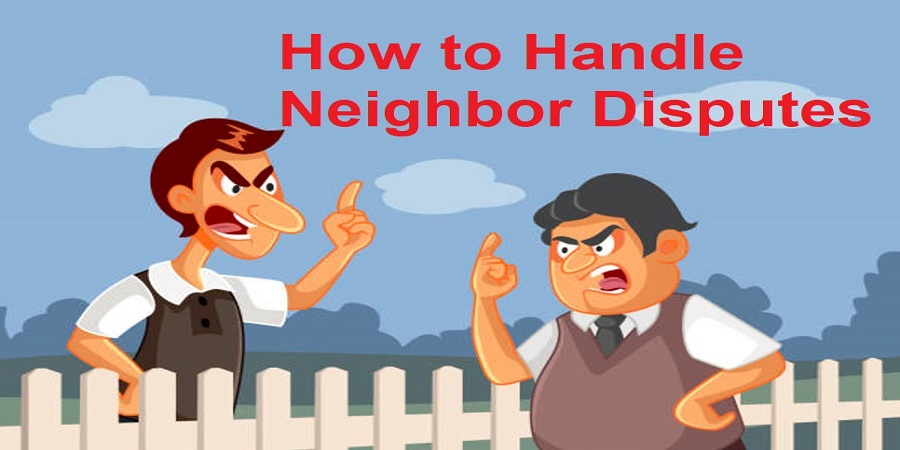
Handle Neighbor Disputes implies solving conflicts, which occur between individuals, who live in close proximity. Such issues may include noise, property line, pets, harassment, common areas or maintenance. The goal will be to resolve conflicts in a just, lawful, and non-violent manner, and at the same time honor the rights and the well-being of each person. The conflicts between neighbors are either civil or criminal. Civil matters refer to cases that are normally dealt with through speaking, written notice, mediation, or court proceedings and are typically resolved through a conversation, written notice, mediated, or court proceedings. Criminal cases deal with harassment, threats or physical injuries and may need the police intervention or even criminal charges. Having an idea of what kind it is assists you in making the correct choice of strategy.
What Neighbor Disputes Are
Neighbor conflicts arise when neighbors differ in their boundary, property rights or choice of lifestyle. Otherwise, these conflicts may boil very fast, and lawsuits or intense hostility can occur.
Why Legal Handling Matters
By taking the legal aspect of resolving neighbor disputes, one can reduce the level of escalation and get a fair resolution. Informal arguments can provide relief in the interim, yet unless they are properly directed by a lawyer they may happen again, inflict damage to property or result in harassment. Handling of legal offers a systematic process such as mediation, written notices and court intervention where necessary.
Common Causes
One of the most common triggers is noise complaints and it entails loud parties, building works or barking dogs. Boundary and property issues arise when neighbors fail to agree on the fences or shared walls or ownership of land. There is also the issue of pets like wandering and dirty habits that increase tension. Harassment: verbal or physical constitutes a poor working climate and can easily be the subject of a court case. Getting the cause of a dispute is crucial in deciding the appropriate approach to legal or mediation.
Homeowners can safeguard their possessions, health and liveliness and harmonious coexistence in the neighborhood by identifying such build to rule cases and availing the appropriate legal measures. Conflicts can be managed amicably, documented and by engaging the services of a professional where the need arises thus avoiding an expensive case in court.
Understand Your Legal Rights
Civil vs. Criminal Neighbor Disputes
Depending on the severity of the cases, neighbor disputes can be categorized as civil or criminal cases. Civil cases deal with property, boundaries, noise or nuisance related matters and are settled by way of mediation, fines or lawsuits. The criminal cases are as a result of a neighbor harassing, threatening, vandalizing, or assaulting their neighbors, which may be accompanied by a criminal and police involvement. Being aware of the difference would enable you to follow the right legal direction.
Your Rights as a Homeowner or Tenant
Homeowners and tenants can enjoy their property in peace, without extreme noise, damage, harassment, and trespass. Landlords are required to respond to tenants concerning neighbor complaints, whereas home owners can pursue remedies directly in ordinance or even in the civil court. I can act both responsively and lawfully to protect your rights without going out of my way to create a conflict.
Legal Examples of Neighbor Violations
An owner of a house who gets cut off by a neighbor when trimming trees over their boundaries can give a civil damages claim. A tenant who is subjected to loud music and verbal abuse all the time may submit a formal complaint and request a restraining order. In case a neighbor poses a threat with physical harm a criminal injunction or police charges might follow. This is done to demonstrate why it is essential to write down what happened, consult a lawyer and act accordingly to defend your rights.
By understanding the nature of conflicts and your legal rights, and the real cases and legal process, you can make wise, legal actions to solve your problems and protect your property and livelihood.
Document Everything
Importance of Written Evidence
Maintaining a document of all the disputes with neighbors benefits your interests in law. Written evidence is an objective description of what has happened and it supports your assertions during mediation, civil court or police reports. Documentation is an effective dispute resolution tool in courts and other places of authorities because they can easily determine the patterns and responsibility.
Best Methods to Record Incidents
Make a note of the occurrences. Create a dated journal of the type of each dispute, date, place and participants. As much as possible, bring supportive materials like photos, videos or audio recordings. In case there are witnesses, take note of their names and contact numbers. When it comes to repetitive noise disturbances, then one can also think of using apps or decibel meters to record quantifiable data. These techniques make your case stronger and make it sound serious and very organized.
Sample Log and Photos Checklist
One entry in a diary can be the following: “Jan 3, 8.15 PM – loud construction noise during 2 hours. Telephone Called local officers at 9 PM. In addition to the log, keep a photo checklist which records the property damage, trespassing or any other violations. Make sure that photos are clear, date-stamped, and context-rich. Use logs to add visual evidence that will give a complete account that leaves no doubt.
The way you document all the incidents systematically, you establish a strong base of legal action and at the same time, you show the level of professionalism and credibility. A conflict can be resolved faster with proper records, and it might even avoid the legal process.
First Steps Before Legal Action
Calm Communication Tips
Calm and respectful communication usually solves disputes in a short period before one goes ahead to court. Be polite towards your neighbor, do not blame him, and concentrate on his behavior, instead of attacking him. Apply I statements like I am worried about the noise at night so that you can make your view without arousing the tension. Remaining calm can help avoid the deterioration of the situation and demonstrates good faith in case the law will have to intervene in the latter instance.
Sample Neighbor Conversation Templates
Ready scripts are used to maintain constructive discussions. E.g., you can say, we have to talk about the recent noise levels, hello. Could the volume be decreased after 10 PM? Regarding property matters: I observed that the fence on our houses has moved. Do you mind going through the boundary line with me? Written communication, such as in the form of polite email messages or letters, is also of assistance, as it places a record of you attempting to solve the situation in an amicable manner.
When to Avoid Talking
Direct communication should be avoided in case you are afraid of being aggressive, harassed or intimidated by your neighbor. During any threat, violence, or criminal behavior, direct talking can aggravate the risk or undermine the possibility of the law. Rather, record the incidents and call the authorities or get some legal advice. Sometimes it is always better to evade the discussion and use formal written notices or mediation.
These initial steps make you responsible and in many cases you provide a point of compromise and it does not have to go to court. Reflective speech, precise record keeping and understanding when to withdraw are the preconditions of successful legal management.
Legal Steps You Can Take
Written Notice or Warning Letter
Depending on the legal action, the first legal measure is usually a formal written notice or a letter of warning. Write down the problem, the date of the occurrence, and what you want to be solved. A letter that is written in a good manner demonstrates that you did make efforts to settle the disagreement amicably and will be used as official record in a legal action in future.
Local Noise or Municipal Complaint
In case the problem is noise or other infractions of the city, call the police. When a complaint is made to the city or homeowners association, it can lead to inspections, fines or official warning that will usually solve the issue without legal intervention. Have a copy of all complaints in your records.
Property Boundary Survey or Legal Notice
In case of boundary disputes have a licensed surveyor to verify property boundaries. After confirming, make a legal notice to the neighbor demanding compliance. This will give safeguards to your property rights and will leave a solid trail in case the dispute goes to court.
Mediation and Conflict Resolution
Through mediation, both parties discuss the problem with a neutral platform with a trained mediator. Mediation is also cheaper and quicker than litigation in resolving many disputes such as noise, property and pet disputes. In case of necessity, mediation records may be submitted to court.
Small Claims Court
Small claims court is effective in case of minor financial losses or property infractions. It enables tenants or home owners to pursue compensation without contracting the services of a full time lawyer. The documentation, photographs, and written correspondence play a pivotal role in such instances.
Civil Lawsuit Options
In case other precautions are not taken, a civil suit can be necessary in case of serious property destruction, harassment, or frequent infractions. Injunctions, monetary damages or restraining orders can be granted by civil courts. Legal advice would facilitate the process and make sure that you work within the right procedures.
These steps in a systematic manner safeguard your rights but at the same time make the neighbor cooperate without any protracted court battles.
When to Hire a Lawyer
Signs You Need Legal Counsel
An attorney is brought in when the disagreements become too personal to handle on a casual basis. The major indicators are the presence of recurrent harassment, damage to property, violation of the boundary, threats of violence, or inability to succeed in previous communication and mediation. A lawyer is able to prepare official notices and defend you in court, giving you every possible protection of your rights.
Lawyer vs. Mediator — Which Is Better?
One of the situations when a mediator is appropriate is noise issues, smaller property disputes, or pet disputes, which can be solved in a sharing way. Mediation is less formal and in most cases cheaper and quicker. A lawyer is a necessity when the legal matter is complicated, like severe property damages, civil suits, or criminal offenses. In many cases, a mixed strategy is the most effective, as mediation should be attempted initially, and a lawyer should be available in case the matter deteriorates.
Estimated Costs & ROI
Legal cost & attorney fees depend on the type of dispute, complication and geographical location. Consultations are between 100 and 300 dollars and full representation in civil court or property conflict could be between 2000 and 10000 or higher. This is despite the initial expenditure, because in the end, when you hire a lawyer, there is usually a high payoff in the form of legal intervention, damage prevention and compensation or injunction to secure your property and sanity.
Learn more about Property & Civil Law Guides in the USA
Examples & Case Studies
Real‑Life Neighbor Dispute Outcomes
There are real cases of how neighbor disputes may and may not work. This happened when one homeowner who had to tolerate nightly disturbances wrote down each disturbance, sent official notice, and engaged in mediation. The result was a mutual amendment of the decision to maintain noise below after 10 PM without going to court.
In a different case, a tenant who had suffered damage to his property due to an encroachment on a common fence line disregarded informal complaints. The tenant employed a law firm, undertook a boundary survey and proceeded to make a civil claim. The court directed the neighbor to fix and recompense the damages to the fence.
What Worked vs. What Failed
What is effective: the regular recording of the case, a composed communication, and a gradual legal aggravation. Disputes are oftentimes prevented in their early stages as formal notices, mediation, and involvement of authorities at the initial stages of the case make it an expensive lawsuit.
What does not work: reactive strategies such as screaming, pretending that the problem does not exist, or that you can handle the aggressive neighbors by yourself. In the absence of regular conversations, which are documented and backed by legal measures, the parties involved in the tenancy or home ownership may develop more disputes which may result in harassment, damages to the property or drawn-out court proceedings.
These instances demonstrate that planned, legal, record-supported and expert-incited actions should be much more efficient compared with impulsive reactions. It can be learnt through your successes and failures and ensure that you use an approach that will give you the best probability of a fair long lasting solution.
Tips to Avoid Neighbor Disputes
Proactive Communication Strategies
The most effective ones are proactive communication strategies (Brush, 2007, p.17).
Courteous dialogue is the key to avoiding conflicts. This is possible by becoming acquainted with new neighbors, discussing mutual expectations, and solving minor issues before they arise. One can be friendly and polite which will bring about openness which will be easy to solve petty inconveniences without involving a law suit.
Neighborhood Etiquette Practices
Ordinary habits of common sense may avert conflict: avoid making noise, tidy places, watch pets, and avoid using common space thoughtlessly. Take up local regulations concerning trash, parking and building hours. Etiquette makes everyone feel honored and creates a favorable community environment.
Examples of Friendly Conflict Resolution
Amicable solutions usually eschew bureaucratic legal actions. An example is when the close neighbor asks a dog to remain inside during specified time and avoids noise complaint. The other example is making the neighbors compromise over who owns what portion of a common driveway used by the large vehicles to avoid recurrent disputes. These solutions are effective as the two parties collaborate, can communicate freely and compromise where necessary.
Through proactive communication, etiquette and friendly method of resolving disputes, a lot of conflicts can be prevented altogether. Prevention secures relationships and saves time, stress, and money based on the necessity of a court of law.
Legal Resources & Templates
Sample Complaint Letter
The initial formal intervention in managing a neighbor dispute is normally in the form of a complaint letter. It must be courteous, precise and include important information like dates, nature of the issue, and what you would like to occur. An example would be: Dear [Name of Neighbor], I am sending this letter about the loud music that has been going on past ten p.m. after several nights. I am asking that the volume should be diminished at these hours. I hope you will co-operate in the amicable settlement of this issue. Having a copy of this letter will serve as an evidence in the event of an escalation of the dispute.
Mediation Request Form
In case of the inability of direct communication, complete a mediation request form in case of the absence of a direct discussion with a trained mediator. Give your contact information, a summary of the problem you want to achieve. The mediation process is faster, less formal and less expensive than the court, and it provides both parties with an opportunity to make a reasonable compromise without disturbing the community.
Court Filing Checklist
A court filing checklist can help you be sure you have all kinds of necessary documents when a dispute requires legal intervention. Included in this list of things are usually written notices; the records of incidences; photos or videos of violations; property survey; witness statements; and previous correspondence. A well structured body of evidence strengthens your case and assists the court in settling the case at hand fast.
With these templates and resources, homeowners and tenants are able to behave systematically, maintain good record keeping, and seek legal solutions as a failover when informal solutions have not been achieved. These are tools that save time, are less stressful and increase the chances of a positive outcome.
Conclusion
Recap Steps
Legal management of neighbor disputes has to be done in a very step by step manner. Begin with being able to know your rights as a tenant or homeowner, write down everything that has happened, and be able to communicate with calmness. In case of informal resolution, proceed using written notices, municipal complaints, mediation or lawsuits. In any case, it is best to consider hiring a lawyer when it comes to the harassment, property damage, or continuing violations.
Encouragement for Peaceful and Legal Resolution
Many conflicts can be solved easily and more quickly with patience, professionalism and appropriate documentation than running to court. You can resolve most conflicts by having a conversation, mediation or even a warm compromise without harming your relationships with neighboring communities, not mentioning that your property and well-being will be safe.
How to Decide the Next Step
How serious and persistent the dispute is is what determines how to take your next step. Minor inconveniences might just need to be communicated about and documented but recurrent cases of violations or threats may need legal intervention. Check your records, assess potential consequences and seek professional assistance to be able to make a strategic decision.
With these steps in mind, you will be able to manage the neighbor conflicts, defend your rights and pursue through the just and sustainable solutions, which will provide not only peace of mind, but also harmony within the community.
FAQs
1. What legal actions can I take against a problematic neighbor?
Some of the things that they can do are to file a complaint about noise, to make a claim in the boundary dispute, to claim about harassment, to claim a small-claims suit or to mediate.
2. Can I call the police for a neighbor dispute?
Only in criminal cases like assault, threatening with serious threats, and property damage. Civil disputes must take other legal procedures.
3. How do I document neighbor disputes legally?
Keep a record of all incidents, photos and video shot evidence, written notices and witness testimonies.
4. Is mediation better than court for neighbor conflicts?
Yes often, because mediation is more expeditious, less expensive, and less stressful, but again, it varies depending on the extent of conflict.
5. How much does it cost to file a neighbor dispute lawsuit?
Prices differ depending on location, court costs, attorneys expenses, and sophistication. Small claims proceedings tend to be cheaper than full civil proceedings.
6. What evidence is needed to prove a legal neighbor dispute?
Records, videos, formal grievances, photos, questionnaires, and testimonies.
7. Can I sue a neighbor for ongoing noise issues?
Yes- when there is written evidence of frequent offenses of local noise ordinance, or nuisance statutes.