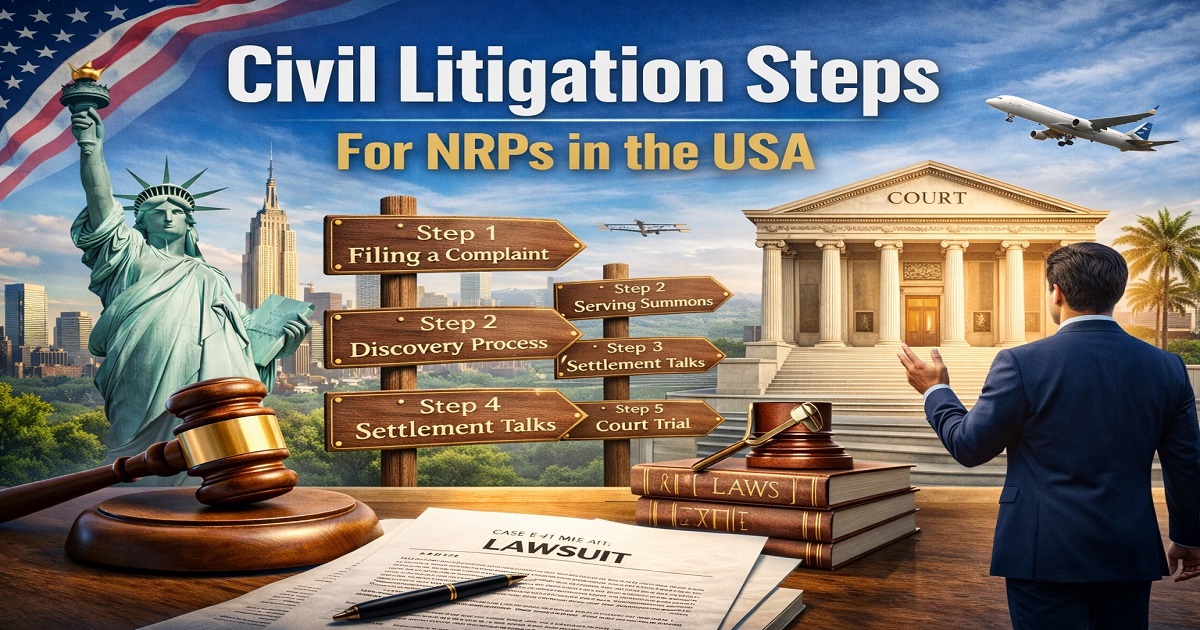
Civil Litigation is a legal procedure that addresses the conflicting issues between persons, companies, or entities. In contrast to criminal proceedings, which involve criminal acts against the state, a civil case involves a dispute over contracts and property, personal injury claims, and other cases that do not involve criminal activity. The process must be understood by all who are involved, be it as a plaintiff, a defendant or a legal representative.
What is Civil Litigation?
Civil litigation involves a process of formal disputes where parties take their matters to court to have them resolved. It deals with the filing of lawsuits, the presentation of evidence and the legal proceedings to a judgment or settlement. The steps can be pleadings, discovery, pre-trial moves, trial and occasionally appeals. Every step is determined by certain rules and timelines and it is important to learn the process to safeguard the rights and deliver positive results.
Why Understanding Litigation Steps Matters
Being familiar with civil litigation processes assists the parties to be ready, mitigate risks, and make sound decisions. In the case of plaintiffs, it explains how evidence can be compiled and claims submitted adequately. To the defendants, it gives information on defense mechanisms and the possible liability. The knowledge of the process can also be used to manage expectations in terms of time, cost and possible results. The possibility of making expensive errors, the adherence to procedural rules, and the high chances of triumphant solution are some of the areas in which being well-informed would help.
Overview of the U.S. Civil Litigation Process
The way civil litigation in the United States is structured is to settle disputes in a fair manner. All stages have got particular ways and learning them assists parties to seek their way in the system effectively.
Pre‑Suit Stage
Parties may also seek negotiation, or alternative dispute procedure, e.g. mediation, before commencing a lawsuit. This step may save time, money and retain business or personal relationships.
Filing
The plaintiff begins with filing the complaint to the relevant court. The complaint includes the description of the dispute, the parties, and the relief. The process of litigation is initiated through filing.
Service of Process
Once it has been filed, the defendant is to be notified. This service of process makes sure that the defendant is informed about the lawsuit and has a chance to defend him or herself. Adequate service is essential to the case.
Response
The accused answers or moves answering the complaint with an admission or denial. Counterclaims can also be submitted by the defendants or defenses can be raised.
Discovery
The discovery enables the two parties to share evidence, documents, and witness information. There are such common tools of case building as the deposition, interrogatories, and the requests of production.
Motions
In a court of law, parties can make motions during litigation asking the court to make decisions on certain issues prior to trial. Ordinary motions are dismissals, summary judgment, or compelling evidence.
Pre‑Trial
Pre-trial settlements and conferences assist in bridging matters, promoting settlements, and trial preparation. The court can also stipulate timelines and procedures during the trial stage.
Trial
In court, the two parties give evidence and arguments before a jury or judge. Upon consideration of the case, the court delivers a judgment/verdict.
Post‑Trial and Appeals
Once a decision is made, the parties may request post-trial relief or appeal to a superior court in case they feel that something went wrong. It is the legal issues that are targeted in appeal, rather than a re-examination of the facts.
Being aware of each litigation phase assists parties to protect their rights, accomplish their deadlines, and decide wisely during the entire process.
Step‑by-Step Breakdown of Civil Litigation
The process of civil litigation can be divided into several steps that must be followed in order to ensure that the parties are ready to go through the case and in order to guard their rights during the process.
Pre‑Suit Investigation
The plaintiff researches the facts, gathers evidence and thinks over a second option of dispute resolution, before initiating a lawsuit. This can be reinforced by initial investigations and occasionally results in an out of court settlement.
Complaint & Summons
The lawsuit is filed when the plaintiff submits a complaint and receives a summons. The complaint identifies the claims, and summons is the official notification of the defendant of the legal action.
Answer or Motion to Dismiss
The defendant reacts by filing an answer to either admit or deny the allegations or he can make a motion to dismiss where the allegations are alleged to be legally insufficient. It is on this stage that the litigation strategy is established.
Discovery
Discovery enables both sides to demand information by way of interrogatories, document production and depositions. This procedure assists in discovering evidence, demystifying facts, and getting ready to face the trial.
Motions
Motions to dismiss cases before trial can be made by the parties including summary judgment (MSJ) or judgment notwithstanding the verdict (JNOV). Motion can also be made to appeal trial results. Motions play a vital role in reducing controversies and in providing clarity on the legal issues.
Settlement Negotiations & ADR
Any of the stages may be subject to settlements negotiations or alternative dispute resolution, including mediation or arbitration. Out of court settlements save time, money and uncertainty.
Trial Preparation
The preparation of evidence, witnesses, and argumentation takes place before the trial. Pre-trial conferences make sure that both parties are prepared and that all the procedural factors are taken into consideration.
Civil Trial Process
In court, litigation parties introduce facts in the form of evidence and question witnesses in the presence of a judge or a jury. It consists of the opening statements, the presentation of evidence, and the closing arguments.
Verdict & Judgment
The court then comes up with a verdict or judgment after deliberating on the case and declares liability and remedies.
Post-trial Motion and Appeals.
Parties can submit post-trial motions or appeal to superior courts in case of any errors and prioritize the legal aspects instead of the reconsideration of the facts.
This systematic practice assists parties involved in civil litigation to move the case through efficiently with minimal risks and maximum opportunities of a successful result.
Example Case Timeline
The civil litigation process itself is a time consuming process. It is important to know the time frame comparison between the civil litigation and what the parties expect. Each situation may vary but a rough outline can give a good idea of how to expect.
Pre‑Suit and Filing (1‑3 Months)
Prior to the time of the filing, plaintiffs tend to research, assemble facts, and seek settlement. The process of making and serving the defendant with the complaint can be a matter of several weeks or months depending on the complexity and place of the parties.
Response and Early Motions (1–2 Months)
After being served, the defendants usually submit an answer or motions to dismiss. The court can spend more time to get hearings or sort out preliminary motions.
Discovery Phase (3–12 Months)
The discovery phase is usually the most extended one, as it includes depositions, interrogatories, and production of documents. The time will be determined by the complexity of the case, amount of evidence, and the willingness of the sides. In complicated issues, discovery may take several months or even more than a year.
Pre‑Trial and Settlement Discussions (1–3 Months)
Parties can use pre-trial settlement and pre-trial conferences after it has been discovered. Mediation or arbitration as methods of alternative dispute resolution might also take place at this step.
Trial (Days to Weeks)
The trial is the beginning phase, normally shorter than the previous phases, which only lasts a few days to a few weeks depending on the amount of witnesses, evidence, and legal complexity.
Post‑Trial and Appeals (Months to Years)
Post-trial motions or appeals may push the schedule far out of control after a verdict has been reached. Appeals dwell on mistakes of law and may take months or even years before a final decision is made.
On average, the civil litigation process in the U.S. lasts between six months and two years and more complicated cases might last longer. The knowledge of such time frames enables parties to make strategic plans, control expectations and make effective strategic choices during the litigation process.
Learn more about Property & Civil Law Guides in the USA
Important Rules & Legal Standards
Civil litigation is regulated by certain rules of law and standards that make sure that cases are examined fairly and efficiently. Knowledge of these rules assists parties to abide by procedural requirements as well as safeguard their rights during the process.
Federal vs. State Court Rules
In the U.S. civil cases can be tried either in a federal or a state court, based on the character of the conflict. The federal courts are guided by the Federal Rules of Civil Procedure that standardize the proceedings which include the filing, discovery, and motions. Civil procedure rules in state courts are set by individual jurisdiction. It is important to know the rules that are applicable because inappropriate procedures may lead to time wastage, termination, or negative consequences.
Statute of Limitations
The statute of limitations is a time limit within which a lawsuit should be filed. Once the time has elapsed and a claim is filed, the court will normally strike it down no matter how valid it is. Various categories of civil claims (personal injury, contract actions, claims to property, etc.) include time limits, which are not always defined by the state law. When this is done promptly, legal rights are not lost and claims cannot be struck out.
By being aware of these legal standards, the plaintiffs and the defendants find it easy to navigate through the litigation system with confidence, deadlines, and abide by the rules of the procedure. Adherence to the rules of the court and the knowledge of the time limits are all required steps to the successful resolution of the civil litigation.
Common Pitfalls & How to Avoid Them
Civil litigation may be complicated. Minor errors may cause adverse delays, cost escalation, or a dissatisfactory result. The awareness of pitfalls to avoid assists parties in the process.
Missing Deadlines
Courts impose strict deadlines regarding complaints, response, motions and discovery. The failure to provide such dates may lead to the dismissal of a claim or defense. To prevent it, create a comprehensive litigation timetable, remember of important dates and meet deadlines of court orders.
Incomplete Discovery Responses
Discovery involves full disclosure of documents, information and witness testimony. Unresponded or evaded questions may prompt penalties, fines or adverse inferences on trial. Completely answer any discovery request, maintain precise records and peruse all request to avoid contact.
Poor Evidence Planning
The lack of proper organization and planning of evidence may dilute a case in court. The evidence should be relevant, admissible, and evident. Develop a document collection, storage and presentation strategy. When the preparation is done early, it makes the necessary information ready when required and aids in making a case.
By taking these identified pitfalls in advance, parties are able to minimize legal risks and enhance efficiency and its chances of succeeding. The main elements of the successful civil litigation are careful planning, organization, and focus on the procedural requirements.
Tips for Success in Civil Litigation
There is a need to be strategic in civil litigation, prepare and focus on details. The best practices can help minimize risks, save time, and increase the probability of a positive outcome.
Effective Documentation
It is important to keep orderly, correct, and full records. Record all the communication, contracts, receipts and evidences of the dispute. The right documentation will make sure that you have the facts that you require at all times and will back your case in a court of law.
Use of Experts
Expert witnesses like forensic accountants, doctors or even industry experts are allowed to give testimony and reports which help to clarify issues that are not well clear. Early involvement of the right experts increases the credibility and justification of the claims or defense, and may affect the negotiations during settlement or trial results.
Strategic Motions
Litigation can be influenced by filing motions at the appropriate point. Issues can be narrowed, weak claims thrown out, or a good result achieved by tactical motions e.g. motions to dismiss, summary judgment or motions to compel discovery, to achieve a favorable result before trial. Considering motions is more effective and can boost the legal argument.
Early Settlement Assessment.
Evaluation of settlement opportunities at an early stage can save time, minimize the costs, and prevent unnecessary risks of trials. Weigh risks of settlement vs. risks of trial, think over negotiation or alternative dispute resolution, and compare and contrast risks of trial versus a compromise. Early judgment enables sound judgment that holds resources and realizes viable solutions.
Careful documentation, professional assistance, tactical legal measures, and prompt settlement issues can help parties to cope with civil litigation and maximize their opportunities to reach a successful resolution.
Tools & Resources
Practical resources and tools can also make the civil litigation process easier, allow the parties to remain organized, and not leave out important steps. The resources are particularly important to the plaintiffs, defendants, and their legal teams.
Sample Complaint
One of the complaints is a sample complaint that helps you to mould claims, determine the parties, and the relief that you would like. Looking through a template will help make sure that your complaint will be presented to the court and that you provide the facts and legal grounds of your case.
Checklist for Litigation Steps
A litigation checklist is a road map that enumerates all the key steps, which are filing, service of process, discovery, motions, pre-trial work, trial, and post-trial procedures. A checklist ensures that all deadlines are kept in sight, that everything is in order and that you do not miss out on any important moment that may lead to a delay in the case or undermine your case.
Discovery Calendar Template
A discovery calendar will take care of all the dates of interrogatories, depositions, document production, and response to discovery requests. Good timing will ensure that the rules of the court are followed and the issues of missing or late submissions are minimized.
By relying on such tools and resources, the efficiency and reduction of mistakes and facilitation of strategic decisions are enhanced during the litigation process. To be successful in civil litigation, it is necessary to be prepared and clearly guided to overcome the trial.
FAQs
1. What are the major steps in civil litigation in the USA?
The civil litigation process usually starts with pre-suit investigation, complaint, discovery, motion practice, trial and potential appeal.
2. How long does civil litigation take?
Time varies. Single cases can be resolved in a few months; complicated ones can take years, particularly those involving a lengthy discovery or appeal.
3. What is discovery?
The official exchange of information between parties, documents, testimony, and interrogatories, is known as discovery.
4. Can civil cases be settled before trial?
Yes. The majority of civil suits resolve prior to trial by means of negotiation or alternative dispute resolution such as mediation.
5. What is a motion for summary judgment?
It is an application to the court to dismiss a case without case trial; based on the argument that, there are no disputable material facts.
6. What happens if a party misses a deadline?
Failure to meet time limits (e.g. filing an answer) may result in default judgment or loss of rights of process.
7. Do civil litigation rules differ between federal and state court?
The Federal Rules of Civil Procedure are applied by federal courts, and different states have their own rules.
Conclusion & Actionable Takeaways
The process of civil litigation can be very complicated, time-consuming, and expensive. Knowing how to make things work is beneficial to the parties. Pre-suit research to post-trial appeals, every phase has a set of procedures, time limits, and points of strategy. Risk mitigation increases the likelihood of a positive outcome.
Main lessons: record everything; consider all the pleadings and motions; prepare the evidence and expert testimony thoroughly. Simplify the process with the help of sample complaints, the checklists, and discovery calendars so that to prevent such frequent errors as missed deadlines or unfinished responses.
Plaintiffs, business owners, tenants, and defendants are recommended to consider early settlement or other alternative dispute resolution options to save time and reduce costs and cut uncertainties. With an expert civil litigation lawyer, you will be sure to act within the guidelines of the procedure, read the clauses correctly, and take good strategic decisions.
Preparation, organization and informed decisions are the keys to success. With the litigation process mastery, best practice, and available resource use, parties defend their rights, avoid risks, and get practical, win-win solutions.